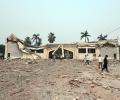
A total of nine terror sites in Pakistan, including five in Pojk, linked to Lashkar-e-Taiba (Let) and Jaish-e-Mohammed (Jem), were targeted with meticulous planning to avoid civilian casualties.
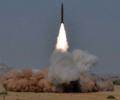
Pakistan on Thursday successfully test-fired a ballistic missile capable of carrying nuclear and conventional warheads to targets as far as 1,500 kilometres, bringing many Indian cities under its range.
India has to fill in all the critical gaps in missiles, ammunition, sensors and stockpile in the fastest possible manner, focusing on the critical instruments that worked this time, asserts Shekhar Gupta.

Meet these Inspiring Lady Soldiers who made history this year.

Lt Gen Kalita also stated that the Army is constantly monitoring the activities across the border and is well prepared to meet any emerging challenges.
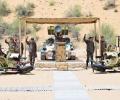
'War is not an answer. War is not a solution.' 'Deterrence is a solution. We should have the stick with us with which we can beat Pakistan.'

Air Vice Marshal Arjun Subramaniam lists the major operational takeaways from the 1971 War in his new book 'India's Wars, A Military History, 1947-1971'.

During Operation Sindoor, Indian naval ships, submarines and aircraft were operationally ready and deployed, projecting strength and preparedness to deter any "potential actions from our western adversary" in the maritime domain, Navy chief Admiral Dinesh K Tripathi said on Friday.

Gen Rawat carried out an aerial recce of certain areas and was briefed about key aspects of the security matrix in the region by senior military commanders.
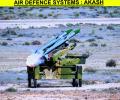
It marked a "milestone" in India's journey towards technological self-reliance in military operations, the ministry said on Operation Sindoor.

Pakistan on Saturday test fired two short-range ballistic missiles capable of carrying nuclear and conventional warheads and striking Indian cities, with Premier Yousuf Raza Gilani saying it was time for the world to recognise his country as an atomic power.The armed forces conducted 'training launches' of the Shaheen-I missile with a range of 650 km and the Ghaznavi missile with a range of 290 km at the conclusion of an annual field training exercise.
"It is shocking to note that Turkey, the second-largest arms supplier to Pakistan after China, has played a key role in modernising Pakistan's navy and enhancing its aerial warfare capabilities. "This defence collaboration is not just commercial; it is ideological, targeting the stability of South Asia and emboldening Pakistan's military adventurism," SJM national co-convenor Ashwini Mahajan said in a statement.

The Border Security Force (BSF) launched "Operation Sindoor" in retaliation to unprovoked firing and shelling by Pakistani Rangers along the International Border (IB) in Jammu. BSF troops destroyed three terrorist launch pads and targeted 76 Pakistani border outposts and 42 forward defence locations. The BSF action came after Pakistan launched heavy firing and shelling on 60 Indian posts and 49 forward positions, reportedly providing cover for an attempted infiltration by 40-50 terrorists.

Chief of Army Staff Gen Manoj Pande has carried out a comprehensive review of India's military preparedness along the Line of Actual Control (LAC) in Arunachal Pradesh in his first visit to the border state after last month's clash between Indian and Chinese forces in the Tawang sector.
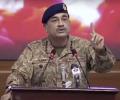
Asim Munir and his brand of short-sighted army officers give no inkling of paying heed, changing course or learning lessons from the past, observes Rana Banerji, who headed the Pakistan desk at RA&W.

General Naravane's UAE and Saudi Arabia visits communicate India's long awaited arrival in the domain of integrated foreign policy where the diplomatic and the military domains both complement each other much more substantially, observes Lieutenant General Syed Ata Hasnain (retd).

Agni-I missile is equipped with sophisticated navigation system which ensures it reaches the target with a high degree of accuracy and precision.

16 Indian Army divisions face China, 20 face Pakistan and two divisions are reserves. This powerful signal can hardly be missed in China or Pakistan, notes Ajai Shukla.

'Fears in Washington began to intensify when it was realised that subsequent Pakistani and Indian attacks on major military facilities -- which were significant in terms of geographic scope and intensity -- could rapidly take both sides to where neither actually wanted to go.' 'The US objective was to stop the fighting as soon as possible. Everything else was secondary.'

'If they aim to remain aligned with the public sentiment, as any democratic government should, then they must respond. Why else would the prime minister have cut short his visit to Saudi Arabia? And why would he have instructed the home minister himself to travel to Srinagar to assess the situation firsthand? This suggests that something is indeed being planned. I am quite certain of that, although the exact form it will take remains to be seen.'

Lieutenant General B S Raju, who will take over as the new DGMO, handed over the charge of the strategic XV Corps of the Army, which guards the Line of Control in Kashmir Valley, to Lt Gen D P Pandey.

'The present generation, either due to historical amnesia or political propaganda, has been fed a narrative that paints India as an adversary rather than an ally.'

'While my generation carries with it the memory of the Chinese perfidy of 1962, this generation will carry the memory of Chinese perfidy in Galwan.'

'China did not expect India to show such strategic resolve in defending its territorial integrity.'
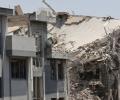
An inconclusive end to this war will pose high risk for Netanyahu of a cascading demand for a regime change in Israel, predicts Ambassador M K Bhadrakumar.
He then went on to say that, however, he won't get a Nobel Peace Prize for any of his efforts.

Pakistan on Wednesday successfully test-fired a new ballistic missile which is capable of carrying both conventional and nuclear warheads up to a distance of 1,300 kilometres.

"Based on this consensus, the process of disengagement is almost complete. Our efforts will be to take the matter beyond disengagement; but for that, we will have to wait a little longer," he added.

India on Thursday night swiftly foiled Pakistan's attempts to hit various key Indian installations including military stations at Jammu, Pathankot and Udhampur with drones and missiles, the defence ministry said.

Pakistan on Monday successfully test-fired a nuclear capable ballistic missile with a range of 900 kilometers, days after testing a similar missile capable of hitting targets as far as 1,500 kilometers, bringing many Indian cities under its range.

China supplied more than $20 billion worth of arms to Pakistan. These include 20 J-10CE and JF-17 Block III fighter aircraft, Wing Loong drones, frigates, submarines, Hongqi HQ-9P surface-to-air missiles, 240 PL-15E air-to-air missiles, LY-80 air defence systems, ZDK early warning aircraft and other weapons.

He was honoured 'in recognition of his commendable military prowess and immeasurable contribution to further fostering the long and friendly association with India'.

The meeting came after the Indian Army thwarted an attempt by the Chinese Army to transgress into Indian areas near the southern bank of Pangong Tso near Chushul in Ladakh on the intervening night of Saturday and Sunday.

'India is a top-tier security partner for Australia and we continue to prioritise practical and tangible cooperation that directly contributes to Indo-Pacific stability.'

Wrapping up his two-day visit to Ladakh, Gen Naravane said the Indian Army has undertaken precautionary deployment in some areas and that the force is well prepared to safeguard the territorial integrity of the country.

"Today there is a government in the country which cannot compromise even on one inch of the country's borders," the prime minister added.

'The greatness of India can be experienced by meeting Indians on the frontiers of India.' 'Every citizen on the border is a soldier'
The tearing hurry to form theatre commands has to be replaced by a balanced and deliberate approach. We need to accept that this process will take time if executed correctly and in the best interests of the Indian armed forces, argues Commodore Venugopal Menon (retd).

India's tactical and operational response demonstrated its ability to prosecute tri-service operations, even without a formal tri-service doctrine or the higher command structure needed to coordinate it, points out Ajai Shukla.

The meeting started at around 11.30 am at Moldo on the Chinese side of Line of Actual Control (LAC) opposite Chushul to defuse the tensions in Eastern Ladakh sector due to Chinese military build-up, the sources said. This is the second meeting between the two corps commanders.
 © 2026 Rediff.com - Advertise with us - Disclaimer - Privacy Policy - Sitemap - Feedback - About us - Terms of use - Grievances